
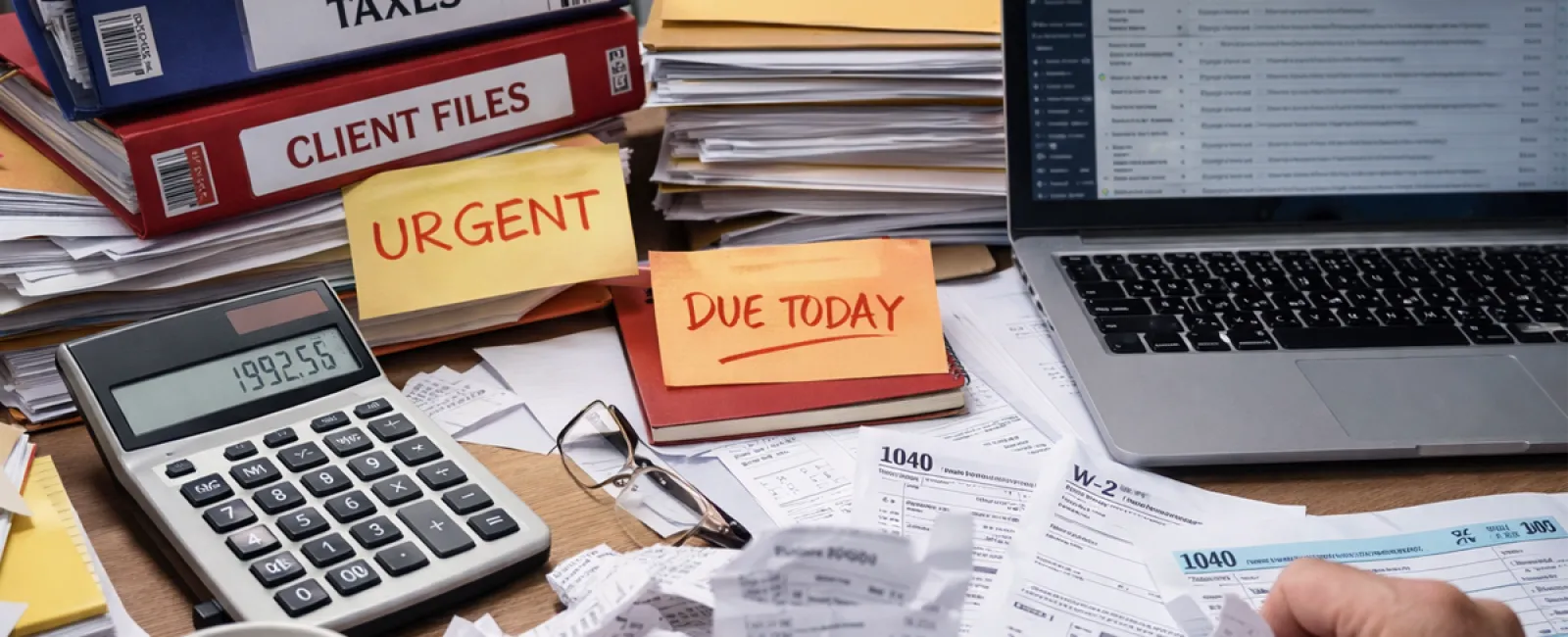
It's March, and the pressure is on.
Your accountant is overwhelmed, your bookkeeper is rushing to keep up, and deadlines are looming. The flood of emails keeps everyone racing against time.
With everyone focused on surviving the busy season, it's no surprise hackers have noticed too.
Security experts report a dramatic rise in phishing scams during tax season, with March seeing about a 28% surge in tax-related fraudulent emails compared to quieter times. These scams appear perfectly ordinary, mimicking routine business communications when staffs are most distracted.
This isn't coincidence.
It's strategic timing.
Here's what's headed your way—and four straightforward strategies to shield your business from becoming an easy mark.
The Pressure Cooker Supply Chain
Many overlook the fact that hackers don't only target accounting teams.
They prey on the chaos surrounding tax season.
During this busy period:
- Clients hurriedly send sensitive files without usual care
- Employees skip standard verification steps to meet demands
- Requests like "Just send me the file" replace customary caution
- Verification processes get bypassed due to overwhelming workloads
Everything accelerates.
And when speed rules, mistakes are inevitable.
Fraudsters don't chase calm, meticulous businesses—they target those caught in a frenzy. March is prime time for this.
Spotting These Scams in Action
This isn't fiction.
It's an email indistinguishable from the rest sitting in your inbox.
- An email from "your accountant" requesting a resend of W-2s due to a supposed delivery failure
- A message from a vendor claiming their bank info has changed and prompting an update
- A DocuSign request demanding immediate signature on a tax form
- An urgent plea from "your CEO" needing help while traveling
None of these raise alarms.
They all feel like normal tax-season operations.
That's why they're effective.
Why Even the Busy Fall Victim
This isn't negligence—it's human nature.
When inboxes overflow and deadlines press, people skim, assume, and respond quickly.
Scammers exploit this behavior.
Their emails capitalize on the hurried, missing subtle red flags. They don't need recklessness—just your busyness.
And March ensures nearly everyone is overwhelmed.
Four Essential Steps to Dodge Being Targeted
The great news: you don't need advanced tech or a full security team—just a few deliberate habits during peak periods.
1. Confirm payment updates by phone
If you receive an email about a vendor's changed banking details, don't reply directly. Instead, call a trusted number to verify. This simple practice blocks many costly scams.
2. Take your time with sensitive data requests
Urgency should prompt caution—not haste.
If someone demands W-2s or financial documents immediately, pause and confirm authenticity first.
Legitimate senders will wait; scammers won't.
3. Verify urgent messages through alternate channels
If an email stresses urgency, double-check by call, text, or internal message.
Genuine emergencies survive quick verification; fake ones collapse.
4. Alert your team to stay vigilant
This week, remind your staff that tax season heightens scam risks.
Encourage them to slow down, double-check, and ask questions if something feels off.
Giving permission to pause can prevent major headaches later.
Key Takeaway
Tax season is stressful enough without adding "victim of fraud" to the mix.
The scams now aren't ingenious—they're timed to hit when you're rushed.
They count on haste.
They depend on assumptions.
They exploit the March rush.
You don't need to reinvent your systems.
Simply slow down when urgency hits and verify suspicious requests.
That's often all it takes.
Quick Check: Is Your Business Ready?
Your operations may already have solid safeguards, which is excellent.
But if tax season tends to drive reactive behavior or you're uncertain how your team handles pressure, consider a free 15-Minute Discovery Call for a quick evaluation.
No gimmicks. No pressure. Just clarity on whether small habit shifts could save you big trouble during this season.
If this doesn't ring true for your company, please share it with someone it might help.
Click here or give us a call at 316-867-4566 to schedule your free 15-Minute Discovery Call.


